Safe Ceiling Fan, Chandelier, and Outdoor Light Mounting in Chico
November 12, 2026
Table of Contents
- [Why Proper Fixture Mounting Matters for Chico Homes](#why-proper-fixture-mounting-matters-for-chico-homes) - [Common Risks of DIY Ceiling Fan and Light Installs](#common-risks-of-diy-ceiling-fan-and-light-installs) - [What Makes a Ceiling Fan Mount Safe and Secure](#what-makes-a-ceiling-fan-mount-safe-and-secure) - [Chandelier Mounting: Weight Ratings and Support Methods](#chandelier-mounting-weight-ratings-and-support-methods) - [Outdoor Light Fixtures: Weatherproofing and Wiring Considerations](#outdoor-light-fixtures-weatherproofing-and-wiring-considerations) - [How Our Owner-Operated Process Ensures Quality Work](#how-our-owner-operated-process-ensures-quality-work) - [Choosing the Right Handyman for Fixture Installation in Chico](#choosing-the-right-handyman-for-fixture-installation-in-chico) - [Scheduling Your Ceiling Fan or Light Installation With Us](#scheduling-your-ceiling-fan-or-light-installation-with-us) - [Frequently Asked Questions (FAQ)](#frequently-asked-questions-faq)
Why Proper Fixture Mounting Matters for Chico Homes {#why-proper-fixture-mounting-matters-for-chico-homes}
A ceiling fan or chandelier does more than add light or airflow. It hangs over living spaces, bedrooms, and kitchens, and it has to stay put for years. In Chico, where summers are hot and fans run for many hours a day, a fixture that is even slightly off-balance or poorly anchored can wobble, loosen its screws, or pull at the wiring over time.
We see plenty of homes where the fixture works fine on installation day but starts to rattle within a few months. Usually the cause is not the fixture itself. It is the support underneath it, or the way the weight was distributed during mounting.
**What proper mounting gives you:** - Stable operation with little or no wobble - Reduced strain on wiring connections - Correct weight support for the fixture size - Fewer callbacks for loose hardware or noise
If you are planning an upgrade, start by checking what is already in the ceiling. That one step tells you a lot about whether the job is a simple swap or needs additional support.
Common Risks of DIY Ceiling Fan and Light Installs {#common-risks-of-diy-ceiling-fan-and-light-installs}
Many homeowners can swap a basic light fixture, and that is a reasonable project for a confident DIYer. Ceiling fans and heavier chandeliers raise the stakes. The most common problems we encounter fall into a few categories.
**Typical issues we see:** - **Standard electrical boxes** that are only rated for light fixtures, not fan weight - **Fans mounted with insufficient hardware**, such as short screws or missing lock washers - **Unbalanced blades**, which cause vibration that gradually loosens the mount - **Wiring left under tension** because the canopy was not seated correctly - **Chandeliers hung from a single point** without proper bracing when the weight demanded more
Consider a common scenario: a homeowner installs a 50-pound fan on a box that was rated for a 10-pound light. The fan may run for weeks without trouble, then one day the box shifts, and the fan starts to sag. That is the moment a small problem becomes a safety concern.
If you have already started a project and are unsure whether your ceiling can handle the load, stop and have it checked before you tighten the final screws.
What Makes a Ceiling Fan Mount Safe and Secure {#what-makes-a-ceiling-fan-mount-safe-and-secure}
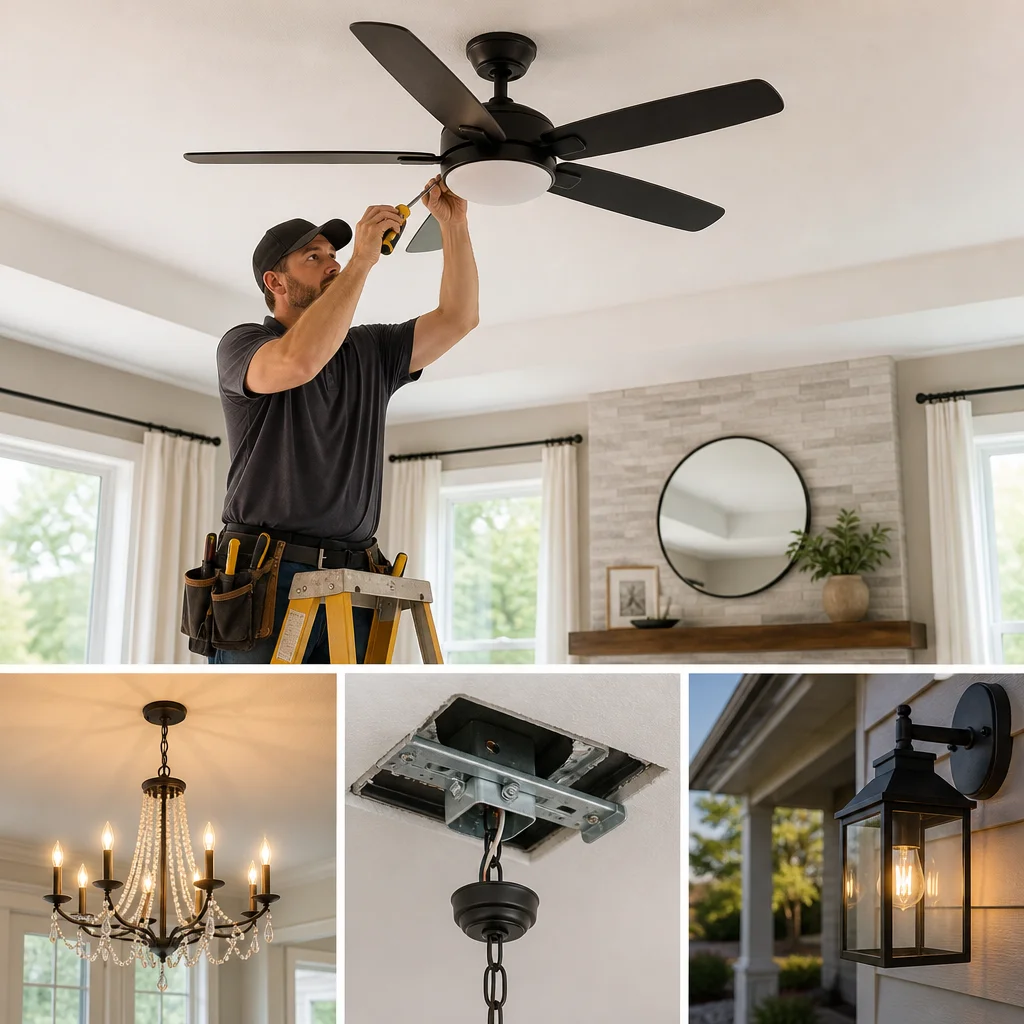
A secure ceiling fan installation depends on a rated support system, correct hardware, and careful balancing. Each part matters, and skipping one can undo the others.
**Key elements of a sound installation:** 1. **A fan-rated electrical box** secured directly to a structural joist or brace, not just to drywall 2. **Hardware sized for the fan** using the manufacturer's included mounting bracket and bolts 3. **Proper wire connections** with insulated wire nuts and the ground wire secured 4. **Blade balancing** after installation to reduce vibration 5. **A final check** of all screws, set-screws, and canopy fit
We recommend checking the fan's weight rating and the box's rating before you begin. If the box is not rated for fan use, it should be replaced with one that is. Replacing a box is often a straightforward part of the job, but it does require access to the framing above.
**Quick check before you start:** Gently tug on the existing fixture box. If it moves, flexes, or feels attached only to the ceiling surface, it probably needs bracing or replacement.
Chandelier Mounting: Weight Ratings and Support Methods {#chandelier-mounting-weight-ratings-and-support-methods}
Chandeliers present a different challenge. They can weigh anywhere from a few pounds to over 100 pounds, and their shape often puts the load at an angle. Getting the support right depends on knowing the fixture's weight and choosing the right method.
**Common support approaches:** - **Rated fan box with a brace** for lighter chandeliers, anchored to ceiling joists - **Adjustable hanger bar** spanning two joists for heavier fixtures - **Specialized support kits** designed for chandeliers over a set weight threshold
Before mounting, confirm three things: - The fixture's listed weight, including any included bulbs and chain - The box or bracket's rated capacity - Whether the chain or stem is rated to carry the load
A useful rule of thumb is to avoid relying on the ceiling surface alone. Drywall and plaster cannot hold a heavy chandelier, no matter how well the screws are placed. The load should transfer into the framing.
If your chandelier is large or sits in a high-traffic area such as a dining room or entryway, we suggest having the support system evaluated before installation.
Outdoor Light Fixtures: Weatherproofing and Wiring Considerations {#outdoor-light-fixtures-weatherproofing-and-wiring-considerations}
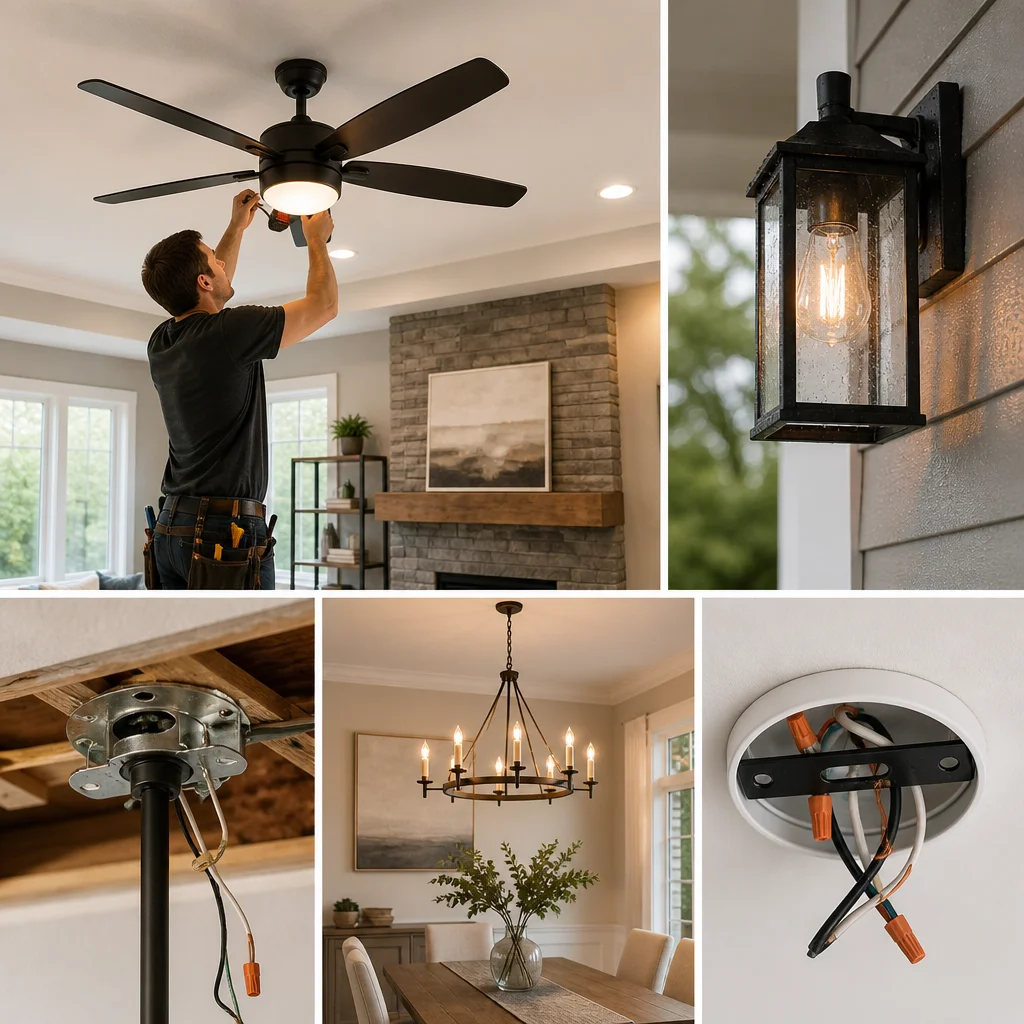
Outdoor lights face sun, rain, dust, temperature swings, and insects. A fixture that looks fine in the store can fail within a season if water gets into the wiring or the housing is not sealed properly.
**Points to address for outdoor installs:** - **Use wet-rated fixtures and components** for exposed locations - **Install a weatherproof box or cover** with a sealed gasket - **Use outdoor-rated wire and connectors** and keep connections above the level where water pools - **Add a GFCI-protected circuit** where local code and the installation require it - **Seal the fixture base and mounting holes** with appropriate exterior sealant
Consider a porch light over a front door in Chico. Summer heat can cause gaskets to dry out, and winter rain can find any gap. A small amount of caulk and a properly seated gasket can make the difference between a light that lasts a decade and one that needs replacing in two years.
Wiring is also worth checking. Older outdoor circuits may lack proper grounding or weather protection, and those conditions should be corrected before a new fixture goes in.
How Our Owner-Operated Process Ensures Quality Work {#how-our-owner-operated-process-ensures-quality-work}
We run 89 Built Handyman as an owner-operated business, which means the person who reviews your request is the same person who shows up to do the work. That keeps communication direct and makes accountability straightforward.
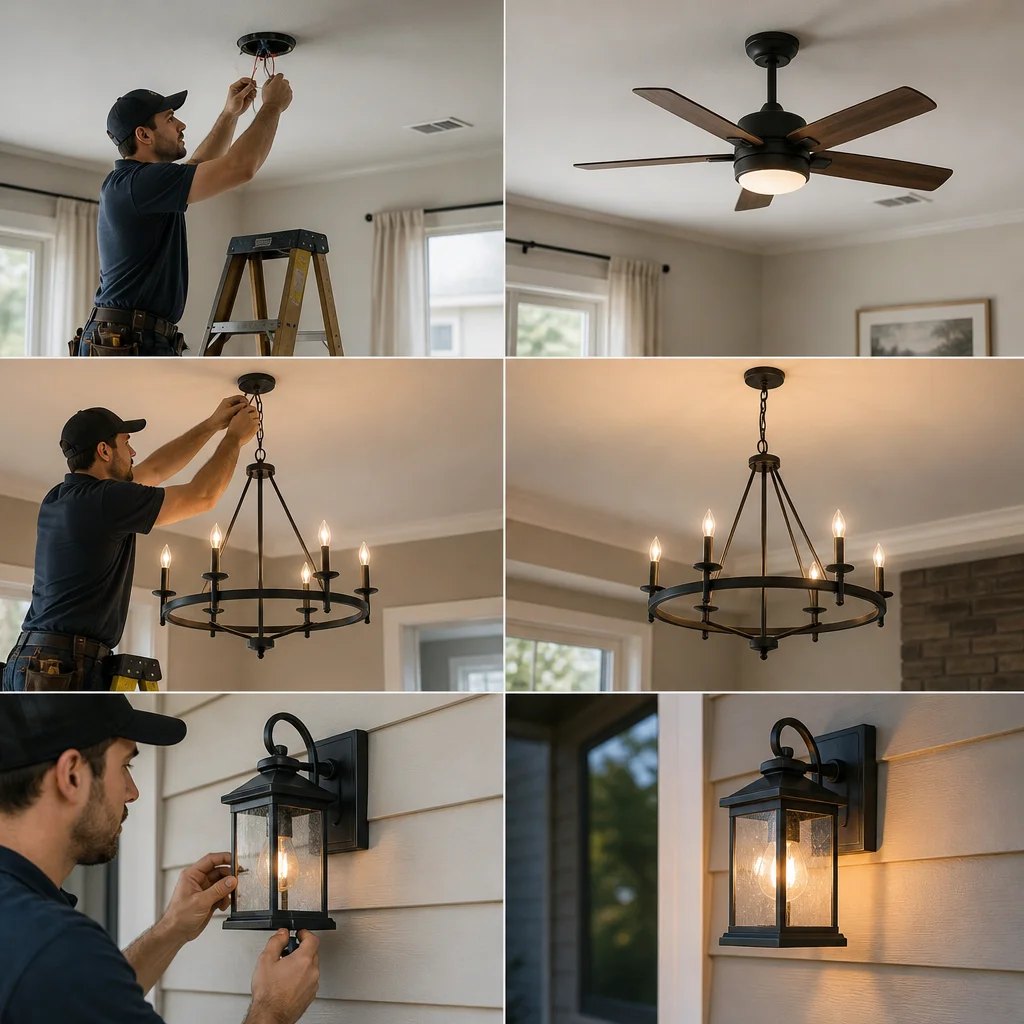
**How we approach each fixture job:** - **Review the request and photos** to understand the ceiling, box type, and fixture details - **Confirm the fixture's weight and support requirements** before scheduling - **Identify any work that may need a licensed electrician** and let you know clearly - **Install and balance the fixture** with attention to hardware and wiring - **Walk you through the result** so you understand how it was mounted and what to watch for
We do not guess at support requirements or push a job past its limits. If a box needs replacing or bracing, we will explain why and what it involves. If a project falls outside the scope of general handyman work, we will say so and point you toward the right trade.
Choosing the Right Handyman for Fixture Installation in Chico {#choosing-the-right-handyman-for-fixture-installation-in-chico}
Not every handyman approaches fixture work the same way. When you are comparing options in Chico, look for signs that the person understands load, wiring, and long-term reliability, not just how to hang a light quickly.
**Questions worth asking:** - How do you check the ceiling support before mounting a fan or chandelier? - What happens if the existing box is not rated for the fixture? - Will you tell me if this job needs a licensed electrician? - Can you explain the mounting method before you begin?
Clear answers to those questions tell you a lot. A good installer will be specific, honest about limits, and willing to slow down when the job calls for it. You can find more details about our work on our [Chico handyman services](https://89builthandyman.com/) page.
If you are also weighing general electrical work alongside your fixture project, our guide on [electrical fixture mounting](https://89builthandyman.com/blog/best-electrical-fixture-mounting-services-for-chico-homeowners-27537) covers what to look for in more detail.
Scheduling Your Ceiling Fan or Light Installation With Us {#scheduling-your-ceiling-fan-or-light-installation-with-us}
The best way to start is by sending us the details of your project. The more information we have, the better we can assess what the job involves before we talk about timing or cost.
**What to include in your request:** - The type of fixture (ceiling fan, chandelier, or outdoor light) and its make and model if you have it - Photos of the existing fixture or box, and of the ceiling area - The fixture's listed weight, if available - The room or location, including whether it is indoors or outdoors - Any other tasks you would like handled during the same visit
Once we review your request, we will let you know whether the job is something we can complete directly, whether it needs additional support, or whether a licensed trade should be involved. We will not promise pricing, scheduling, or results until we have assessed the project.
Reach out through our website to submit your project details, and we will get back to you with next steps. We look forward to helping you get your fixtures installed safely and done right.
Frequently Asked Questions (FAQ) {#frequently-asked-questions-faq}
Do you check the electrical box before mounting a ceiling fan? {#do-you-check-the-electrical-box-before-mounting-a-ceiling-fan}
Yes. We confirm that the box is rated for fan use and firmly anchored to a structural brace before we hang anything. Standard light boxes are not designed to support the weight and motion of a ceiling fan, so we replace them with a fan-rated box when needed.
Can you install a chandelier that is heavier than the original fixture? {#can-you-install-a-chandelier-that-is-heavier-than-the-original-fixture}
We can, but we first check the weight rating of the existing support and the framing behind it. If the mount cannot safely carry the new load, we recommend reinforcing the support or installing a brace so the fixture stays secure over time.
Do you install outdoor lights that are rated for wet and dry conditions? {#do-you-install-outdoor-lights-that-are-rated-for-wet-and-dry-conditions}
Yes. We use fixtures rated for wet locations, install weatherproof covers, and seal entry points to keep moisture out of the junction box. We also check that the wiring and GFCI protection suit the location before we finish the job.